By Neil Owen
Key Takeaways
- OEMs now prioritise manufacturing discipline over mere capacity, focusing on quality and reliability.
- The four pillars of manufacturing discipline are: quality as a system, repeatability at scale, process control, and right-first-time as a commercial metric.
- Predictable quality results from embedding design for manufacturing and continuous feedback loops.
- Manufacturers must standardise processes and leverage automation to enhance efficiency and reduce defects.
- The UK electronics manufacturing sector must cultivate discipline to maintain competitive advantage and instil confidence in their output.
OEMs are no longer just buying capacity - they’re buying confidence.
For decades, electronics manufacturing services (EMS) were judged by a straightforward equation: cost, capacity, and speed. If you could build it at scale, at the right price, and deliver on time, you won.
That equation is changing.
Today, OEMs are placing increasing value on something far less visible - but far more powerful: manufacturing discipline.
From Capacity to Confidence
UK manufacturing continues to hold a significant global position, ranking 11th worldwide with ~$279bn output, demonstrating both resilience and capability at scale. (Make UK)
But scale alone is no longer the differentiator.
According to Make UK, the sector’s future competitiveness is being shaped by productivity, digital adoption, and process excellence - not just output volume. (Cambridge Industrial Innovation Policy)
In electronics manufacturing, this shift is even more pronounced.
OEMs are asking:
- Can you deliver right-first-time, not just on time?
- Can you scale without variation?
- Can you de-risk my product lifecycle, not just build it?
This is where discipline becomes commercial.
The Four Pillars of Manufacturing Discipline
1. Quality as a System, Not an Outcome
Quality is no longer inspected at the end - it is engineered into the process.
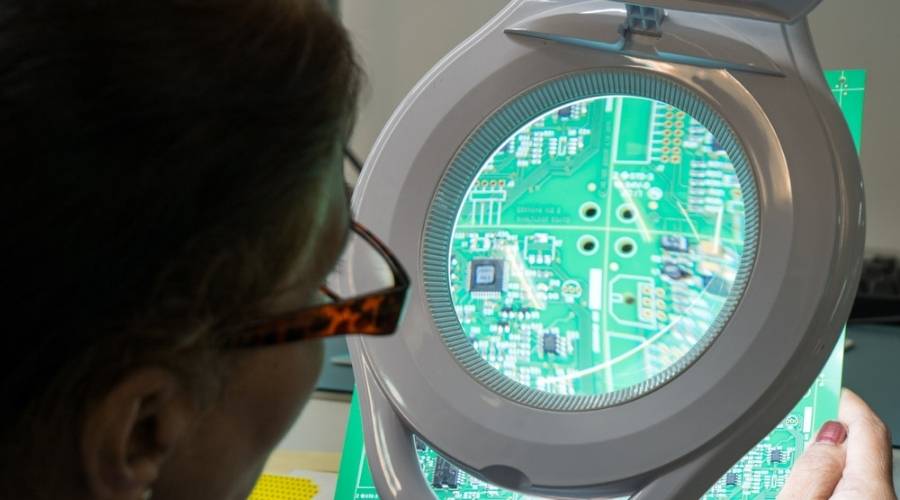
Modern manufacturing environments increasingly rely on in-line inspection and process monitoring to reduce defects, eliminate rework, and improve productivity. (Wikipedia)
In practice, this means:
- Design for Manufacturing (DfM) embedded early
- Test strategies aligned to product risk
- Continuous feedback loops across NPI and production
The result? Predictable quality, not reactive correction.
2. Repeatability at Scale
For OEMs, scaling production is no longer just about increasing volume - it’s about maintaining identical outcomes at every stage.
The challenge is that variability increases exponentially with:
- Multi-site production
- Complex supply chains
- Product mix and lifecycle changes
Manufacturers that win are those who:
- Standardise processes across sites
- Digitise production data
- Control variables at source
This is what transforms manufacturing from a capability into a reliable system.
3. Process Control Over Heroics
The era of “fix it on the line” is over.
As manufacturing becomes more complex, leading organisations are shifting from human intervention to process control - leveraging automation, AI, and data to anticipate issues before they occur.
Research increasingly shows that predictive quality models can identify and eliminate defects before they happen, improving both efficiency and output reliability. (arXiv)
This is critical in electronics, where:
- Tolerances are tighter
- Failure costs are higher
- Traceability is non-negotiable
Discipline here means engineering out risk, not managing it.
4. Right-First-Time as a Commercial Metric
Right-first-time is no longer a quality KPI - it’s a business metric.
Every defect avoided:
- Reduces cost
- Protects lead times
- Preserves customer trust
And increasingly, OEMs are selecting partners based on their ability to deliver:
- Consistent yields
- Stable ramp-ups
- Predictable delivery performance
In short, they are buying certainty.
Final Thought
The UK electronics manufacturing sector has always been known for its engineering excellence.
The next phase of competitiveness will be defined by something more fundamental:
The discipline to deliver that excellence - consistently, repeatably, and at scale.
Because in today’s market, confidence is the product.