Key Takeaways
- Connected devices need careful PCB assembly: fine-pitch parts, BGAs and RF sections that are sensitive to placement, shielding and grounding.
- Radio modules, chipsets and memory can go end-of-life quickly, so obsolescence planning should start at design.
- For products that handle sensitive data, ask which site will build them and what that site is certified to.
Table of contents
- What counts as communications electronics?
- Why is PCB assembly harder for connected devices?
- How do you plan for short component lifecycles?
- What should you ask about data security in manufacturing?
- Can one partner take you from prototype to volume?
- Six questions to ask your EMS partner
- How NOTE UK supports communications programmes
- Frequently Asked Questions
An IoT or connected device is only as good as the board inside it. Most connected products combine fine-pitch components, a radio, an antenna and firmware in a small enclosure, and many are expected to work in the field for ten years or more. Choosing who builds them is a decision about signal performance, supply continuity and data security as much as price.
This article explains what UK OEMs should look for when they outsource the manufacture of IoT devices, network equipment and other communications electronics, and how NOTE UK supports these programmes across its six UK sites.
What counts as communications electronics?
Communications electronics covers any product whose main job is to send, receive or route data. In practice that includes:
- IoT devices and sensors
- Network products and switches
- Optical data transmission equipment
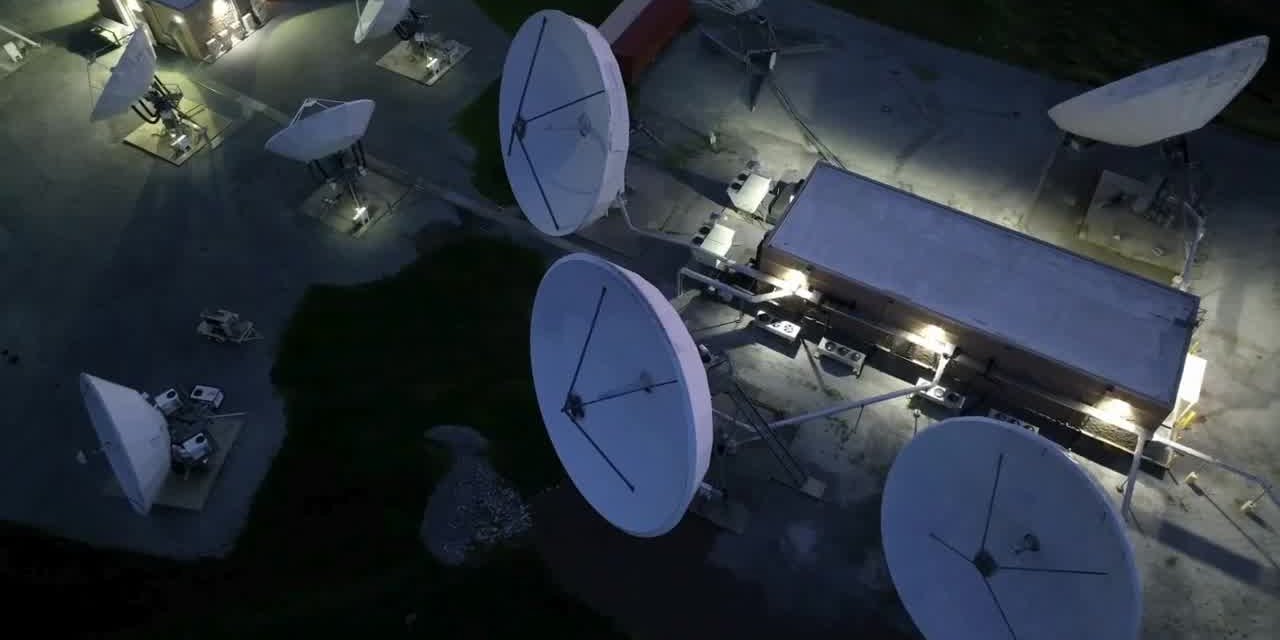
- Satellite-based systems
- RF and antenna technology
- Smart home and smart building products
These products have a few things in common that shape how they should be built: dense boards, radio performance that depends on how the board is assembled, long field lives and components that change quickly.
Why is PCB assembly harder for connected devices?
A typical IoT or network board packs fine-pitch SMT components, BGAs and mixed-technology parts into a small footprint. BGA joints sit underneath the package where no one can see them, so X-ray inspection is the only reliable way to check them. Automated optical inspection (AOI) covers the visible joints. At NOTE UK both are standard on this kind of work, with assembly to IPC-A-610.
Radio sections add another layer. Signal performance depends on component placement, grounding and shielding as well as on the layout itself. Your engineers own the RF design. What a manufacturer adds is a controlled process that builds that design the same way every time, including shielding integration and careful handling of controlled impedance boards.
The cheapest point to catch a problem is before the first build. A design for manufacture (DFM) review looks at component placement, test access and solderability while changes still cost very little. Our article on why design for manufacture decides product cost goes into this in more detail.
How do you plan for short component lifecycles?
Communications products live with a tension. Radio modules, chipsets and memory can go end-of-life within a few years, yet the product itself may be in the field for ten years or more. If no one is watching, the first sign of trouble is a part you can no longer buy.
The answer is to plan for it from the start: monitor lifecycle status on the bill of materials, agree approved alternative parts early, and make last-time buys from a forecast you trust. We cover this in After the Launch: obsolescence, repairs and spares.
What should you ask about data security in manufacturing?
Some connected products carry encryption keys, are provisioned during production or end up in secure environments. For these, ask how the production area is controlled, who has access and what build records are kept.
Within NOTE UK, ISO 27001 is held at STI Hook and STI Poynton, so programmes with formal information security requirements are usually placed at those sites.
It is also worth being clear on product compliance. NOTE UK applies CE labels under customer instruction, but certification responsibility stays with the customer as the product owner.
Can one partner take you from prototype to volume?
Changing manufacturer between prototype and production means re-qualifying, re-learning and often re-designing. Connected products move fast, and those delays cost launch dates.
NOTE UK supports communications programmes from NPI and fast-turn prototyping through to volume production across six UK sites: Windsor, Haddenham, Basildon, Wolverhampton (Kasdon), STI Hook and STI Poynton. Where a product needs to ship as a finished unit, our box build work is led from Haddenham. For customers who need capacity in other regions, the wider NOTE Group has facilities in Sweden, Finland, Estonia, Bulgaria and China.
Six questions to ask your EMS partner
- How do you inspect BGAs and fine-pitch joints? Look for X-ray and AOI as standard, not as an extra.
- How will you handle the RF sections of my board? Ask about shielding, grounding and placement control.
- Who monitors component lifecycles, and how far ahead? You want warning measured in months, not weeks.
- Which site will build my product, and what does that site hold? Certifications are held by individual sites, not by groups.
- Can you take me from prototype to volume and box build? Fewer handovers mean fewer surprises.
- What happens when a unit comes back from the field? Repair, test and spares should be planned, not improvised.
How NOTE UK supports communications programmes
We build IoT devices, network products, optical and satellite-based systems, RF and antenna technology and smart building products for UK and international OEMs. You can read more on our communications electronics manufacturing page, or talk to our team about your next programme.