Key Takeaways
- High-power boards need thermal management and component derating considered at the design stage, before the first prototype is built.
- Hi-pot and insulation resistance testing should be agreed early: who supplies the test equipment, who writes the specification and who keeps the records.
- A charge point is a box build as much as a PCB assembly, so check that your partner can handle cable harnessing, power supply integration and final assembly under one roof.
Table of contents
- What counts as GreenTech electronics?
- What makes high-power electronics harder to build?
- How should you plan testing for EV charging products?
- Why is a charge point a box build project?
- How do you keep a ten-year product supplied?
- What about the environmental side of manufacturing?
- Six questions to ask your EMS partner
- How NOTE UK supports GreenTech programmes
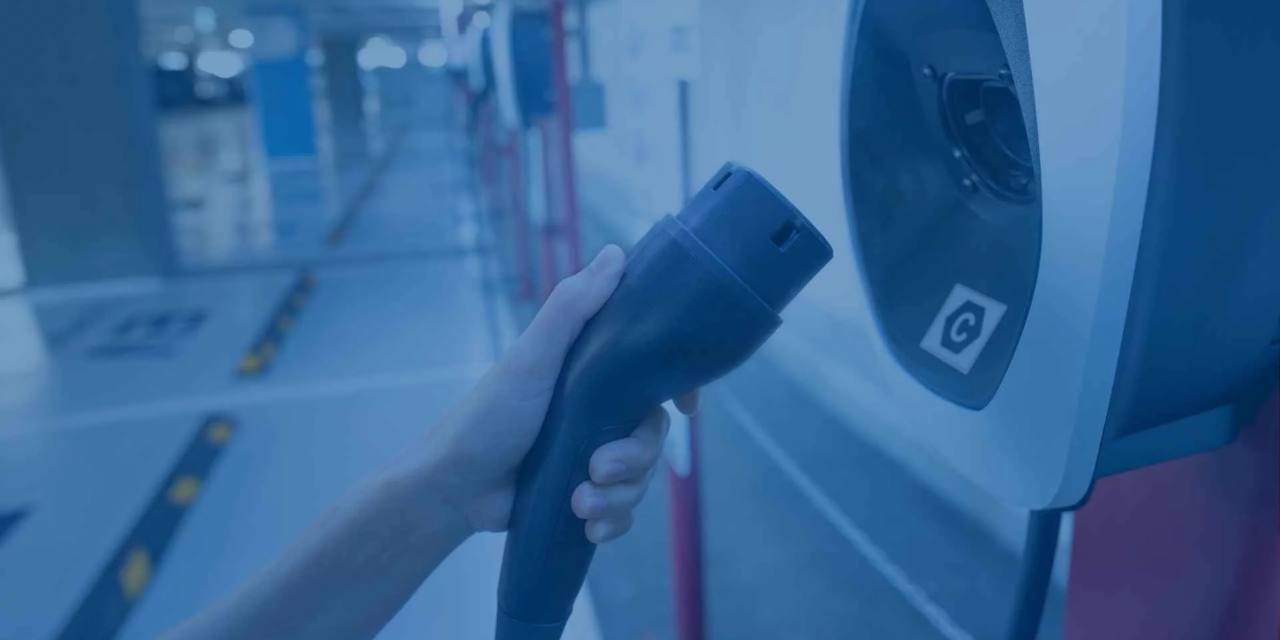
An EV charge point has to switch high currents safely, talk to a back-end network and keep working outdoors for ten years or more, often in a car park with no shelter. Inside it are power conversion, control boards, metering, communications and a lot of cabling, all in an enclosure that has to be built the same way every time.
This article looks at what EV charging OEMs, and makers of energy storage and power control products, should plan for when they outsource manufacture, and how NOTE UK supports GreenTech programmes across its six UK sites.
What counts as GreenTech electronics?
In manufacturing terms, GreenTech covers the electronics that generate, store, convert and manage energy. At NOTE UK that includes:
- EV charge points and connected charging units
- Energy storage and battery management systems
- Smart power control and distribution systems
- Energy-efficient LED lighting controls
- Climate and heating management systems
- Renewable energy monitoring and control electronics
What these products share is high power, long field lives and a need for test evidence that supports the customer’s own certification.
What makes high-power electronics harder to build?
Higher voltages and currents change the build. Heat has to go somewhere, so copper weights, component spacing and the position of power devices on the board all matter. Components run closer to their limits, so derating needs checking against real operating conditions, including an enclosure that may sit in direct sun. Spacing between high-voltage conductors also has to survive assembly, which means tight process control around soldering, cleanliness and handling.
These issues are far cheaper to fix in design than on the production line. Our engineering team reviews thermal management and derating as part of design for manufacture (DFM) and design for test (DFT) support, from the first prototype. Our guide to PCB assembly explains how this fits into the wider build.
How should you plan testing for EV charging products?
Test is where many high-power programmes slip. Hi-pot and insulation resistance checks are standard for high-voltage assemblies, but the details vary by product and market, so they need agreeing before production starts.
Our test engineers have hi-pot testing experience for high-voltage assemblies. The way we work is simple: you supply the test equipment and specification, and we provide the process capability, documentation and test records to support your product certification. We confirm the specific test requirements at quotation stage, so there are no surprises at first article.
CE marking follows the same principle. NOTE UK applies CE labels under customer instruction, and the customer, as the product owner, keeps responsibility for certification.
Why is a charge point a box build project?
Open up a charge point and the PCB assemblies are only part of the story. There are power supplies, cable looms, connectors, displays and an enclosure built for outdoor use. The quality of the finished unit depends on how well all of those come together.
Our Haddenham site leads box build for NOTE UK, working from a 37,000 sq ft advanced manufacturing facility. For EV charging and connected infrastructure customers, the team handles electronics box build, cable and wire harnessing, power supply integration, electromechanical assembly, testing, packaging and fulfilment, for charge points, connected charging units and power and control systems. There is more detail on our box build manufacturing page and in our post on box build and mechanical integration.
How do you keep a ten-year product supplied?
Energy storage systems, charging infrastructure and smart power controls are usually designed for ten years or more in the field. Over that time, power semiconductors, communication modules and controllers will change or reach end-of-life. Planning for this from the start, with approved alternatives and a clear engineering change process, protects both supply and your certification.
We provide component obsolescence management, validated engineering change control and continued supply across the whole product lifecycle. Our post After the Launch covers how we handle obsolescence, repairs and spares once a product is in the field.
What about the environmental side of manufacturing?
GreenTech customers often want their manufacturing partner to share their environmental standards. NOTE UK manufactures to RoHS and REACH requirements as standard, and our Windsor, Haddenham, Hook (STI) and Poynton (STI) sites are certified to ISO 14001 for environmental management.
Six questions to ask your EMS partner
- How do you review thermal management and derating at DFM? Ask to see what a DFM report covers for a high-power board.
- Who supplies the hi-pot test equipment and specification, and who keeps the records? Agree this in writing before first article.
- Can you build the complete unit as well as the boards? Cable harnessing, power supply integration and final assembly at one site mean fewer handovers.
- Which site will build my product, and what is it certified to? Check ISO 9001 and ISO 14001 against the site doing the work.
- How will you manage component obsolescence over ten years? Ask how early you will hear about end-of-life notices and how alternatives are approved.
- Who is responsible for CE marking? Your manufacturer can apply labels to your instruction, but certification stays with you as the product owner.
How NOTE UK supports GreenTech programmes
We build electronics for EV charging, energy storage, smart power and control, lighting controls and climate management for UK and international OEMs, from six UK sites: Windsor, Haddenham, Basildon, Wolverhampton (Kasdon Electronics), Hook (STI) and Poynton (STI). You can read more on our GreenTech electronics manufacturing page, or talk to our team about your next programme.